











Hydration
Signs You’re Chronically Dehydrated (and How IV Therapy May Help)
You drink water every day, and you may still be running low. Ten signs of chronic dehydration, why water alone isn’t always enough, and where an IV drip may help.

In this article
You drink water every day. You carry a water bottle. You think you’re doing everything right.
But what if your body is still dehydrated, and has been for a long time?
Chronic dehydration is more common than most people realize, especially in hot climates like Phoenix, Arizona. Unlike the thirst you feel after a workout, chronic dehydration builds slowly and quietly, and it can affect nearly every system in your body.
In this guide, we’ll walk you through the most common signs of chronic dehydration and explain how IV hydration therapy may help your body catch up in a way drinking water alone sometimes can’t.
What Is Chronic Dehydration?
Dehydration isn’t always about forgetting to drink water on a hot day. Chronic dehydration means your body is consistently running low on fluids over days, weeks, or even months.
It happens when your fluid intake doesn’t keep up with what your body loses through sweat, breathing, digestion, and daily activity. In a place like Phoenix, where temperatures regularly pass 110°F, your body loses fluid faster than most people expect.
The tricky part? Many people adapt to feeling this way and stop recognizing the symptoms as signs of dehydration. They assume they’re tired, stressed, or just getting older.
10 Signs You May Be Chronically Dehydrated
1. Persistent fatigue and low energy
Feeling tired no matter how much you sleep? Dehydration and fatigue are closely linked.
Water plays a critical role in energy production at the cellular level. When you’re chronically dehydrated, your cells can’t work efficiently, and neither can you. That afternoon slump may not be about needing more caffeine.
2. Frequent headaches or migraines
Your brain is surrounded by fluid. When you’re dehydrated, that fluid decreases, and the result can be a classic dehydration headache, sometimes a full-blown migraine.
If migraines are a recurring problem, IV therapy may help: our Migraine Relief drip is built for them.
3. Brain fog and trouble concentrating
Struggling to focus? Forgetting things more often? Feeling mentally “off”?
Even mild dehydration can affect focus, reaction time, mental energy, and mood.
4. Dry skin, lips, and eyes
Your skin is one of the first places to show signs of chronic dehydration. If your skin looks dull or feels tight, and your lips and eyes stay dry despite topical products, your body may need deeper support.
Hydration and skin health go hand in hand: a moisturizer works on the surface, not from the inside.
5. Dark urine or infrequent urination
One of the easiest ways to check your hydration? Look at your urine.
Pale yellow means well hydrated. Dark yellow or amber urine, or urinating only two or three times a day, are common signs of chronic dehydration. Your body is holding on to every drop it can.
6. Muscle cramps and joint pain
Muscles need both water and electrolytes (sodium, potassium, and magnesium) to contract and relax properly. An electrolyte imbalance from chronic dehydration can lead to cramps, tightness, and joint discomfort.
Athletes and active people are especially vulnerable.
7. Digestive issues: constipation and bloating
Your digestive system depends on water to keep things moving. Chronic dehydration slows digestion and can lead to constipation, bloating, and gut discomfort, a connection that’s often overlooked.
Many people reach for fiber supplements when better hydration may be what they need.
8. Dizziness or lightheadedness when you stand up
That head rush when you stand up quickly is called orthostatic hypotension, and dehydration is one of its most common causes.
When blood volume is low, your cardiovascular system struggles to keep up with sudden changes in position. IV fluids may help restore blood volume.
9. Constant thirst despite drinking water
If you’re drinking water but still feel thirsty, your body may not be making good use of it.
Chronic dehydration can disrupt your fluid balance. Plain water alone often isn’t enough: your body also needs electrolytes and minerals.
10. Frequent illness or slow recovery
Your immune system relies on proper hydration to work. When you’re dehydrated, your body has a harder time circulating immune cells and recovering from illness or exercise.
Why Drinking More Water Isn’t Always Enough
When you drink water, your body absorbs it through the gut, and that can slow down when you’re already dehydrated.
Drinking water also can’t correct an electrolyte imbalance on its own. Sodium, potassium, calcium, and magnesium are essential for fluid balance, nerve function, and muscle performance. Without them, water can’t do its job.
Water alone
- Absorbed slowly through the gut
- Slower still when you’re already dehydrated
- Can’t correct an electrolyte imbalance on its own
An IV drip
- Fluids straight into the bloodstream
- Electrolytes and vitamins with the fluids
- A support for good daily habits, not a stand-in for them
That’s where IV hydration therapy comes in.
How IV Rehydration Therapy May Help Chronic Dehydration
IV therapy delivers fluids, electrolytes, vitamins, and minerals directly into your bloodstream, bypassing the digestive system entirely. Many people say they feel better during or soon after their session. A registered nurse or paramedic comes to you with medical-grade supplies.
IV drips for dehydration at Platinum IV Therapy
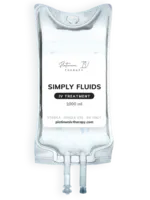
- Simply Fluids: foundational rehydration, 1000cc of saline or lactated Ringer's
- Myer's Cocktail: a vitamin drip with B-complex, B12, vitamin C, magnesium chloride, glutathione, often chosen for dehydration-related fatigue and muscle soreness
- Immunity: hydration with Zinc chloride, B-complex, B12, vitamin C
- Migraine Relief: used for dehydration-triggered headaches, with Pain medication, nausea medication, magnesium chloride, B-complex, dexamethasone
Serving Phoenix and the Greater Phoenix Area
Platinum IV Therapy offers mobile IV therapy and in-clinic drips at our Ahwatukee and Gilbert studios, across the Valley, including:
Phoenix, Scottsdale, Tempe, Mesa, Chandler, Gilbert, Glendale, Peoria, Queen Creek, San Tan Valley, Surprise, Goodyear, Avondale, Buckeye, Fountain Hills, Paradise Valley, Ahwatukee, Laveen, Gold Canyon, Casa Grande, Maricopa, Coolidge, Florence and Eloy.
Frequently Asked Questions About Chronic Dehydration and IV Therapy
What are the most common signs of chronic dehydration?
The most common signs include persistent fatigue, frequent headaches, brain fog, dark urine, dry skin, muscle cramps, digestive problems, dizziness when standing, constant thirst, and frequent illness. Many people live with these symptoms for years without realizing dehydration may be part of the cause.
How is IV therapy different from drinking water?
IV therapy delivers fluids, electrolytes, and vitamins directly into the bloodstream. Water you drink is absorbed through the digestive tract, and that can slow down when you’re already dehydrated.
How quickly does IV hydration therapy work?
Many people notice a difference during or soon after their session: energy, mental clarity, and physical comfort are what people mention first. Sessions run 30–150 minutes depending on the treatment.
How often should I get IV therapy for chronic dehydration?
It depends on your symptoms, lifestyle, and health goals. Some clients book weekly sessions, while others schedule visits every other week or monthly. Our team can recommend a hydration plan for you.
Is IV hydration therapy safe?
Every session is given by a registered nurse or paramedic. First-time patients complete a brief telehealth assessment with our medical team before their session: quick, easy, and all handled online.
Does Platinum IV Therapy offer mobile IV therapy in Phoenix?
Yes. We offer mobile IV therapy throughout Phoenix and the surrounding area, including Scottsdale, Mesa, Chandler, Gilbert, Tempe, Glendale, Queen Creek, San Tan Valley, and more. By appointment, across Maricopa and Pinal counties.
Stop Guessing. Start Feeling Better.
If you recognized yourself in any of the signs above, chronic dehydration may be affecting your energy, focus, immune health, and overall quality of life more than you realize.
You don’t have to keep pushing through exhaustion, headaches, and brain fog. IV hydration may help restore what your body is missing. For fluids on their own, Simply Fluids is 1000cc of saline or lactated Ringer's; for immune support with your fluids, Immunity adds Zinc chloride, B-complex, B12, vitamin C.

Simply Fluids
What’s in it1000cc of saline or lactated Ringer's
Mobile$150In clinic$125
Pricing for in-clinic and mobile visits is different.

A Registered Nurse guides you through your drip. Serving Phoenix, Scottsdale, Mesa, Chandler, Gilbert, Tempe, and communities across Maricopa and Pinal counties.
Running on empty? We come to you.
By appointment, across Maricopa and Pinal counties. A registered nurse or paramedic comes to you with medical-grade supplies.
Subject to provider availability.